I think people who haven’t worked with a personal trainer sometimes assume we’re basically expensive rep counters.
One. Two. Three. Great job. Gimme 30 more seconds.
Spoiler: there’s more to it than that.
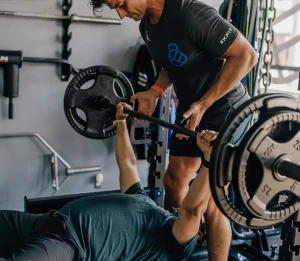
A good personal trainer is watching a lot more than how many reps you’ve done. I’m watching your form, effort, control, fatigue, how the weight is moving, whether the muscles we’re trying to train are actually doing the work and whether you have more in the tank.
And I’m doing all of that while you’re probably telling me a story about your weekend.
That’s the job.
I’m Not Just Standing There Counting to Ten
When you’re doing an exercise, I’m watching how the movement looks. Is this easy for you? Are you working hard enough? Is your form changing as you get tired? Is the muscle we’re trying to work actually doing the work?
Do you have another rep? Another five? Should we add weight? Should we take weight off?
There’s also the bigger question: What kind of training day is this?
Some days you come in feeling great and we can push. Some days you’ve had a terrible night of sleep, work has been nuts or you just don’t have much in the tank. That doesn’t automatically mean we don’t train.
It means I adjust.
There’s a difference between having somebody stand next to you while you exercise and having somebody actually coach you through a workout.
Your Workout Can Change While You’re Doing It
I have a plan before you walk in, but I’m not married to it.
If your triceps are wearing out and I want more work from your chest, I can change the exercise or position. If your shoulders aren’t moving well that day, I’m not going to pretend I didn’t see it because the spreadsheet says overhead press.
If something is too easy, we make it harder. If your form starts falling apart, we back off. If an exercise just isn’t working that day, we do something else.
That’s one of the biggest differences between following a workout and being trained.
I know what I wanted you to do when you walked in. Then I watch what actually happens and adjust from there.
There’s research behind the value of supervision too. One study of moderately trained men found greater maximal strength gains with supervised resistance training than unsupervised training.
I’m Watching for the Difference Between Hard and Wrong
Exercise is supposed to require effort. If everything feels comfortable forever, we’re probably not getting much done.
But hard and stupid aren’t the same thing.
Take a deadlift. I want you learning how to load your glutes and hamstrings instead of just yanking the weight off the floor with your back. With a squat, I want you to understand your position and control before we start worrying about how impressive the number on the bar looks.
Sometimes that means starting lighter.
We may use lighter weight and more reps while you learn what the movement is supposed to feel like. I want you to recognize what muscles are working and be able to control the weight instead of the weight controlling you.
Then we have something useful to build on.
Adding weight is easy. Knowing when adding weight actually makes sense is part of coaching.
I’m Watching Your Form, Not Just Your Reps
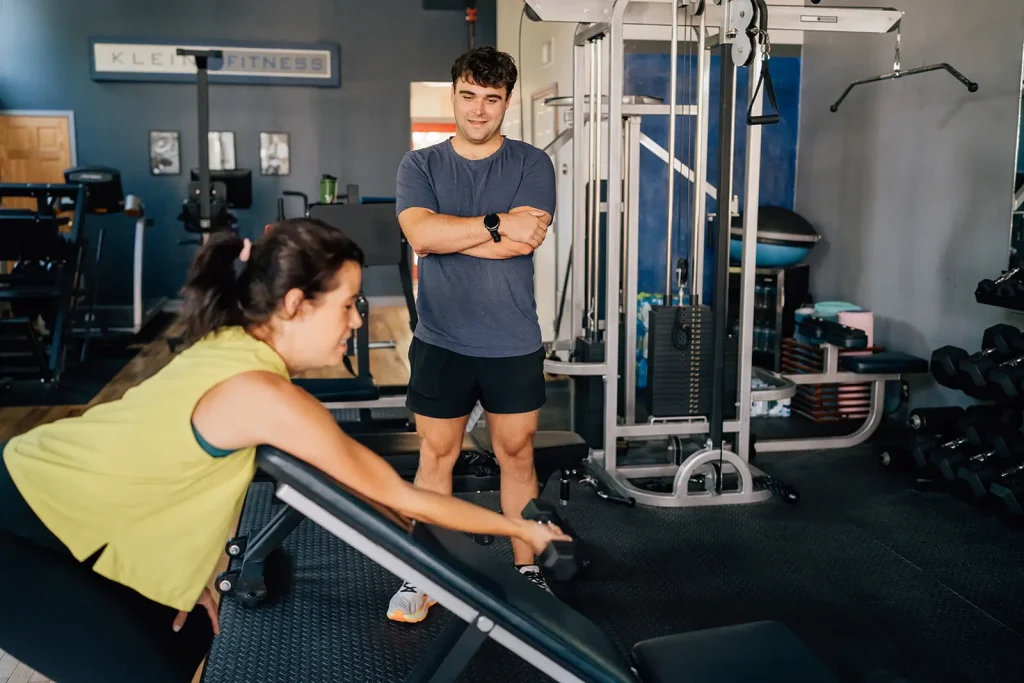
Good form isn’t about making every exercise look perfect for Instagram. It’s about doing the movement in a way that makes sense for what we’re trying to accomplish.
If I’m trying to get more chest out of an exercise and your triceps are taking over, I need to see that. If you’re getting tired and your position starts changing, I need to see that too.
If you’re compensating for something or the exercise just doesn’t look right for you that day, I need to decide whether to correct it, change the weight, change the exercise or move on.
You shouldn’t have to diagnose all of that while you’re in the middle of a set.
You have one job. Do the workout.
I’ll pay attention to the rest.
Experience Means I Don’t Have to Reinvent the Wheel Every Session
I’ve been training people for 15 years. After enough sessions, a lot of this becomes second nature.
That doesn’t mean every client is the same. They’re definitely not. It means I’ve seen enough bodies move, enough good days, enough bad days, enough strong reps and enough ugly reps to make decisions pretty quickly.
I can usually tell when somebody has more in them. I can tell when something needs to change. I can tell when you’re tired.
And I can usually tell when you’re just trying to convince me you’re tired.
That’s experience.
Research comparing supervised and unsupervised resistance training has also found benefits to supervision in specific populations. A 2023 study of young, resistance-trained adults found greater muscular adaptations and better exercise adherence with supervised training.
But you don’t need to think through any of that while you’re training.
That’s the part I like.
You show up. I pay attention.
So, What Does a Personal Trainer Actually Do?
A personal trainer should do a lot more than count reps. During a workout, I’m watching your form and movement, paying attention to effort and fatigue, choosing and adjusting weights, deciding when you can push harder and recognizing when we need to back off.
I’m also changing exercises when something isn’t working, tracking how you’re progressing over time and keeping you moving instead of letting you spend half your workout figuring out what to do next.
There’s a program behind what we’re doing. But there’s also a person standing there paying attention to the person doing the program.
That matters.
Personal Trainer FAQs
What does a personal trainer actually do during a workout?
A personal trainer coaches your workout in real time. That includes selecting exercises and weights, watching your form, monitoring effort and fatigue, making adjustments when necessary and progressing your training as you get stronger.
At least that’s what we’re supposed to be doing.
Counting to ten is the easy part.
Does a personal trainer create the same workout every time?
Not here.
There is a plan, but I adjust exercises, weight, reps and emphasis based on what I’m seeing and how you’re performing that day.
Your goals give us direction. What I see while you’re training helps determine how we get there.
How does a personal trainer know when to increase weight?
I’m looking at your form, effort, control and how the current load is moving. If you’re controlling the weight, maintaining good position and the exercise is getting easier, it may be time to increase it.
More weight is useful when you’re ready for it.
More weight just because your ego wants it isn’t programming.
Does a personal trainer help with exercise form?
Yes. A big part of personal training is teaching you what a movement should look and feel like, then helping you correct it as you learn.
I’d rather teach you how to do something correctly with a lighter weight and build from there than load you up with weight you can’t control.
Do I have to be an experienced lifter to work with a personal trainer?
No. A lot of people come to us specifically because they don’t know exactly what they should be doing.
You don’t need to understand strength programming or know your way around every piece of gym equipment before you start.
Again, that’s kind of the point of hiring us.
Where can I work with a personal trainer in Downtown Memphis?
Klein Fitness is a private personal training studio at South Main Street and Vance Avenue in Downtown Memphis.
We provide individualized personal training based on your goals, experience and what you can do right now.
Want Somebody Else to Do the Thinking for an Hour?
That’s allowed.
Book a free consultation at Klein Fitness. Tell us what you’re trying to accomplish, where you are now and what you need help with. Then come in and do the work.
I’ll do the counting.